AI is Eroding the Career Ladder - MAC143

 PocketCasts
 Apple Podcasts
 Amazon Music
 Spotify
 Castro
 YouTube
 RSS Feed
 Deezer
 Gaana
Gaana 
 PlayerFM
 JioSaavn
 AI is Eroding the Signals Employers Use to Judge Talent — And Nothing Has Replaced Them
There is a problem developing in the professional world that most career advice hasn't caught up to yet. It's not the job-loss story — that one is getting plenty of airtime. It's something quieter, and in a lot of ways more corrosive: the collapse of the signals the entire career ladder was built on.
To understand why this matters so much, you need to go back to the original premise.
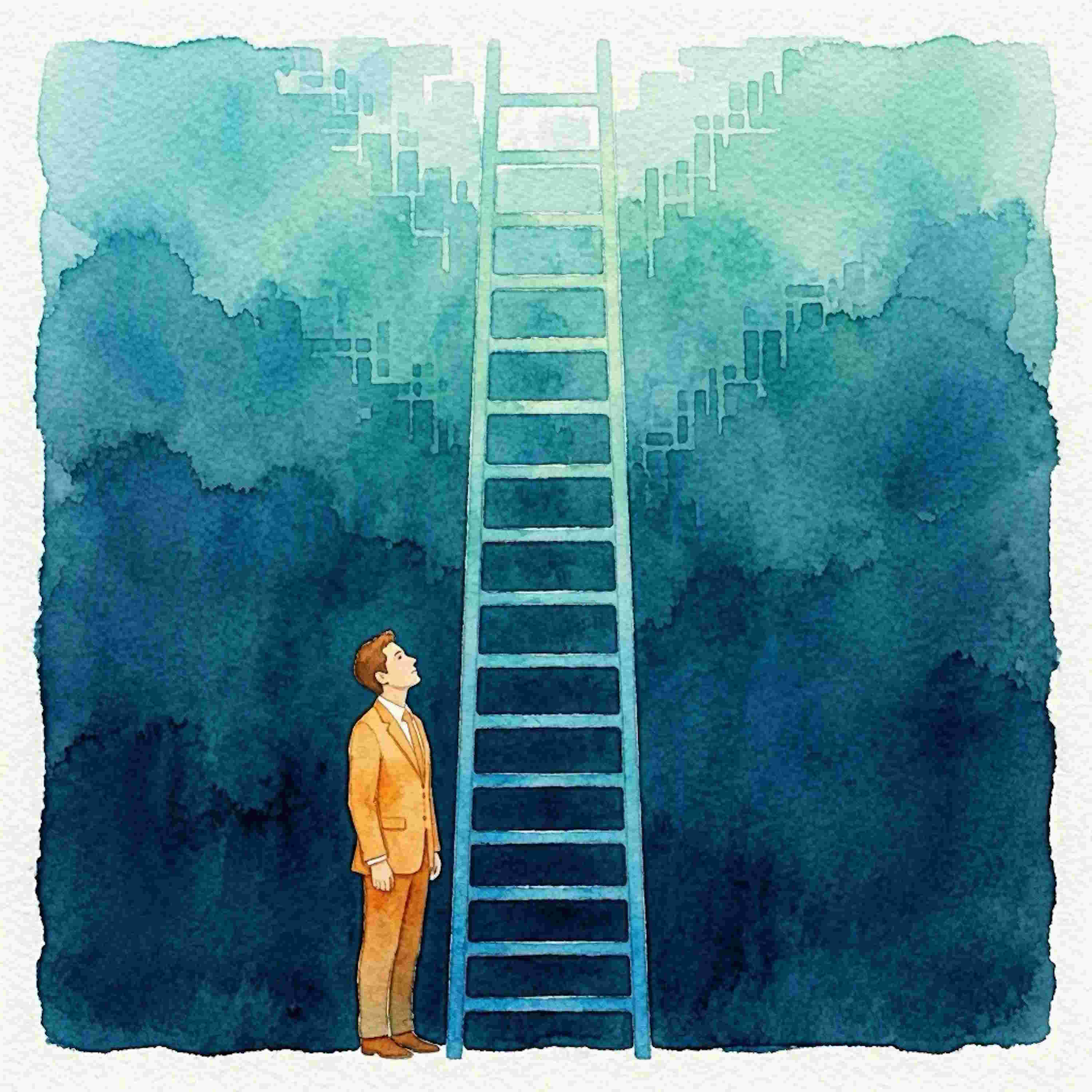
The career ladder — the idea that you start somewhere, prove yourself, get recognized, move up, and repeat — was built on a specific assumption. The assumption was this: the things you produce as a candidate or early-career professional are reasonable proxies for your actual ability.
Your résumé showed you could organize information and communicate clearly. Your cover letter showed you could write persuasively and understood the role. Your portfolio showed you could do the work. Your writing sample showed you had the depth to back up the claims on the first two pages. Your coding test showed you could actually code. Your case study showed you could think.
These artifacts — the things you submitted, the things you produced — were what economists call "costly signals." That term has a precise meaning. A costly signal is one that is expensive to fake. The polish on a résumé used to require actual skill or effort. A strong portfolio used to require actual time and creative ability. A solved technical assessment used to require actual knowledge.
The entire system worked because producing a high-quality artifact was hard enough that only people with underlying competence could do it consistently. The cost of faking it was high. The signal separated the skilled from the unskilled.
AI eliminated that cost. Overnight.
Here's what AI can now do — and this list matters because each item on it is a rung on the career ladder that has just been sawed off:
AI can write your résumé. Not just fix the grammar — write it, from scratch, tailored to the role description, keyword-optimized, polished.
AI can write your cover letter. In your voice, in the tone of the company, hitting every point the job description signaled it wanted to see.
AI can produce your writing samples. Articles, reports, memos, case analyses — indistinguishable, at the surface level, from work done by someone who actually has expertise.
AI can build your portfolio. Design mockups, architecture diagrams, code repositories, campaign decks.
AI can solve your technical assessments. Coding tests that used to require hours of preparation and real ability can now be completed in real time with an invisible screen overlay, an AI tool running parallel to the interview, or — and this has been documented — an earpiece delivering answers while the candidate nods along on a video call.
AI can ace your case study and generate your thought leadership posts. The LinkedIn takes, the industry insights, the professional commentary that was supposed to prove you were a thinker in your field.
Every single proxy the career ladder ran on is now a cheap signal. And when signals go cheap, markets break.
Who This Hits Hardest — And Why the Impact Isn't Evenly Distributed
The disruption here is not evenly distributed. And understanding where the damage lands helps you understand what to do about it.
It hits early-career professionals the hardest. The entry-level job was always the "prove yourself" position. It was the place you produced the things that established your track record. You didn't have relationships yet. You didn't have a reputation yet. What you had was the work you could produce, and the quality of that work was supposed to be the evidence.
That is exactly the layer AI has compromised. The people with no established network, no verifiable track record, and no relationships that could vouch for them — those are the people who were most dependent on artifacts as their primary signal. And that signal is now cheap.
It also hits mid-career professionals who have been accumulating credentials and artifacts under the old model. If you have spent years building a portfolio that looks impressive, you may be sitting on an asset that is being rapidly devalued — not because the work was bad, but because the medium it lives in is no longer being trusted.
And it is beginning to hit the hiring process itself in a way that compounds everything. Employers know they cannot trust the artifacts anymore. So they are falling back on the most expensive, most relationship-dependent filtering mechanism available: people they already know, or people vouched for by people they already know. Which means the hidden job market — the roles that never get posted publicly because they are filled through referrals — is becoming more dominant, not less.
Researchers have now started looking at what happens to labor markets when that filtering mechanism breaks. The findings are uncomfortable. One analysis of digital hiring platforms found that high-ability workers — the people who were most skilled — were being hired at significantly lower rates after widespread AI adoption. Not because they were doing anything wrong. Because their high-quality authentic work was no longer distinguishable from AI-generated work by someone with far less underlying ability. The signal was dead. The market couldn't sort.
If you have been working hard, building real skills, doing real work — and you have noticed that it has started to feel like none of that is translating the way it used to — this is why. The system that was supposed to reward your effort is no longer reliably reading the signal you are sending.
The Reframe: The Proxy Was Never the Point
Here is the thing about all of this. The career ladder was always a proxy. The résumé, the portfolio, the writing sample — those things were never the point. They were stand-ins for something more fundamental: the answer to the question "can I trust this person to do the work?"
Artifacts were just the cheapest available way to approximate an answer.
AI has stripped the proxy. What remains is the real thing. Trust. And trust cannot be generated in 90 seconds with a tool.
The professionals who are navigating this era well are not trying to out-AI the AI in their artifacts. They are building the thing the artifacts were always pointing toward.
What the Professionals Who Are Winning Are Actually Doing
Let's get specific about what that looks like in practice. There are three things the people navigating this era well are doing differently.
The first is building a sustained, observable track record. Not a portfolio. Not a document. A pattern of behavior over time that people have witnessed.
There is a distinction that matters here. A document is a claim. A track record is evidence. A résumé tells me you did something. A referral from someone who watched you do it tells me you actually did it. The first is now cheap. The second is still costly — it requires someone to stake their own credibility on you.
That is the shift. The new filtering mechanism is not the artifact. It is the person willing to vouch for you. And the way you acquire vouchers is by doing visible, verifiable, quality work in front of people who matter — over time.
The professionals advancing well right now are not the ones with the best profiles. They are the ones who consistently show up in rooms where real decisions are made, contribute in ways people remember, and accumulate a network of people who have a stake in their success.
The second thing is distinguishing manufactured presence from earned presence. And this is where I want to be direct, because I think a lot of people are making a serious mistake.
AI-generated LinkedIn posts are not building your credibility. They are eroding it. Not because people are always going to detect them — some won't. But because they produce a veneer of expertise without any of the underlying substance. And veneer fails under scrutiny in exactly the situations where your credibility is being actively evaluated.
The hiring manager who saw your posts and asked you into an interview is now going to have a conversation with you. That conversation is a live demonstration. If the posts were genuine, the conversation confirms what they expected. If the posts were manufactured, the conversation exposes the gap.
Earned presence is different. It is specific. It is grounded in real experience. It is the kind of post that only you could write, because it came from something you actually saw, actually navigated, actually learned. AI can imitate a form. It cannot manufacture the experience the form is supposed to represent.
The professionals building real credibility right now are the ones documenting what they actually did, sharing specific observations from specific situations, and engaging in genuine two-way conversation about the ideas they hold. That is what compounds over time. The manufactured content does not compound — it just accumulates.
The third thing — and I want to spend a moment here because I think it is the most counterintuitive one — is that genuinely skilled people need to start treating live, in-person demonstration as a primary credential.
This is already happening structurally, whether the individuals involved understand it or not. Major companies — including some of the largest in the world — have reintroduced mandatory in-person components to their hiring processes explicitly because the remote, artifact-based layer has been compromised. They are not doing this because they miss the commute. They are doing it because they need a verification checkpoint that AI cannot silently infiltrate.
A live interview — a real one, not a rehearsed one — is still a costly signal. It requires you to think in real time, under pressure, without a tool whispering the answers. Judgment under those conditions is something AI has not yet been able to convincingly fake on behalf of a candidate. Not because AI isn't capable of judgment, but because the human asking the question is watching for something that goes well beyond the answer itself: composure, the ability to hold ambiguity, the quality of the questions you ask back, how you navigate a moment you did not prepare for.
That is where genuine competence still surfaces. And the professionals who know this are investing in their ability to perform in those moments — not just to produce clean documents.
The Macro Picture: Where This Leads Structurally
Let me bring this back to the structural picture, because I think it is important to understand where this leads.
The career ladder as a model assumed that there would always be accessible entry points — ways for people without established relationships to demonstrate competence and earn their way in. Artifacts were those entry points. They were imperfect, but they were available to everyone.
When artifacts become cheap, the entry points close. What replaces them is relationship-gated access — roles filled through referrals, trust-based networks, and the vouching of known quantities. That is a harder system to break into. It advantages people who are already inside it and disadvantages people who are not.
This is not a future problem. It is already being felt in every hiring cycle. The professionals who recognize what is happening and start building the right assets now — observable track record, genuine relationships, the ability to demonstrate judgment in live situations — are not just positioning themselves for the next role. They are building the only kind of credibility that holds in a world where everything else can be faked.
The currency of career advancement is being recalibrated. The old currency was the artifact — the document, the portfolio, the polished application. The new currency is trust. Trust that is accumulated slowly, through consistent behavior, in front of people who can vouch for it.
You cannot generate trust in 90 seconds. But you can start building it right now.
Your Action Plan for This Week
This is not a reason to despair. It is a reason to understand clearly what is actually happening — and to start building the right thing.
Here is what to do this week:
First: Identify one relationship in your professional life where you have actually delivered for someone — where they watched you work, saw the quality of your judgment, and have a first-hand basis for vouching for you. One relationship. If you have been doing good work, this person exists.
Second: Think about whether that person knows what you are trying to do next in your career. Not what role you want — what you are building toward, what you are capable of, what you would want them to say about you if the right opportunity came across their desk. If they do not know, that is the conversation you need to have.
Third: Look at the professional content you have been producing — your LinkedIn posts, your comments, your contributions to professional conversations. Ask yourself honestly: could AI have written that? If yes, you are not building credibility. You are building noise.
The career ladder is not gone. But the rungs have changed. The professionals who figure that out now are the ones who will still be climbing when everyone else is looking around trying to figure out why the old moves stopped working.
Why This Matters Beyond Individual Careers
There is a systemic equity dimension to this disruption that deserves to be named clearly.
The artifact-based system — for all its flaws — was more democratic than the relationship-based system that is replacing it. Anyone could polish a résumé. Anyone could build a portfolio. Anyone could study for a technical assessment. The barriers were skill and effort, both of which were, in theory, available to everyone willing to invest them.
The trust-based, relationship-gated system that replaces it is not equally accessible. It privileges those who already have professional networks — which tend to correlate with prior professional access, elite educational credentials, and geographic proximity to industry centers. First-generation professionals, career changers, geographic outliers, and people returning after career gaps face a structurally harder path in a world where who vouches for you matters more than what you can demonstrate cold.
Understanding this dynamic is not just personally useful — it is a navigational imperative for anyone who doesn't already have a seat at the table where the referrals happen.
The implication is not to give up on building credentials — it is to understand that your investment priority needs to shift. Every hour you spend perfecting an AI-detectable artifact is an hour not spent in a room where someone is watching you work.
Invest in visible work. Invest in relationships with people who can see the quality of your judgment. Invest in your ability to perform live, under conditions you haven't prepared a script for. These are the assets that compound in the new model.
The Bottom Line on Trust as Currency
Trust has always been the ultimate professional currency. The artifact system was just a shortcut — a way to approximate trust at scale, cheaply, without requiring a direct relationship.
AI removed the shortcut. What's left is the long road. And the long road looks like this: showing up consistently, doing visible work, earning the endorsement of people who matter, building relationships before you need them, and performing live when the moment comes.
The professionals who recognize this shift right now — not in two years, not after a failed job search teaches them the hard way — are the ones who will be positioned to move when the window opens. Because windows in the trust economy don't come from submitting the right document at the right time. They come from being the person someone thought of when the need arose.
That is the new career ladder. The rungs are real. The climb is real. The credential is a person who watched you work and is willing to say so.
Start building that. Today. The rest will follow.
TAKE THE SURVEY!
Are you looking for a career coach? If you reach out to me via the contact form, I will arrange an introductory session where we can talk about your career goals and how I can help. If we're a good fit, we can schedule regular coaching sessions.